Share Astronomy Logo

Log In


New Mexico Southern Skies: Tom Simstad


Advertise


Have Some Fun!  Join Share Astronomy.    Signupnow2


Search Blog Posts | List All Blog Posts | New and Noteworthy

By Ken Hudson, Tuesday July 27, 2010 at 08:43 PM | 0 Comments


I just returned from the Midwest Astro-Imaging Conference and Mac Astronomy Workshop (MWAIC) held in Hoffman Estates, IL (near Chicago). What a great conference! I'll tell you all about it, but first I'd like to draw your attention to two up-coming astro-imaging events.


The first event is a PixInsight Workshop by Vicent Peris at the Adler Planetarium in Chicago from September 10-12, 2010. PixInsight is an advanced image processing program designed specifically for astrophotography and "other technical imaging fields". Vicent Peris is an astrophotographer at the Astronomical Observatory of the University of Valencia in Spain and he's also a principal member of the PixInsight Development Team. If you are unfamiliar with this product I would highly recommend that you visit the PixInsight web site and learn more. I will have additional blog posts about PixInsight in the future.


The second up-coming astro-imaging event is the Advanced Imaging Conference (AIC) in Santa Clara, CA from October 22-24. The AIC 2010 is expected to draw together 250 imagers along with approximately 20 speakers and over 30 exhibitors from around the world. Friday, October 22 will be devoted to a series of workshops and Saturday and Sunday will feature general sessions on a wide variety of imaging topics. I have many friends who have attended the AIC in the past and every one of them has had nothing but positive comments.


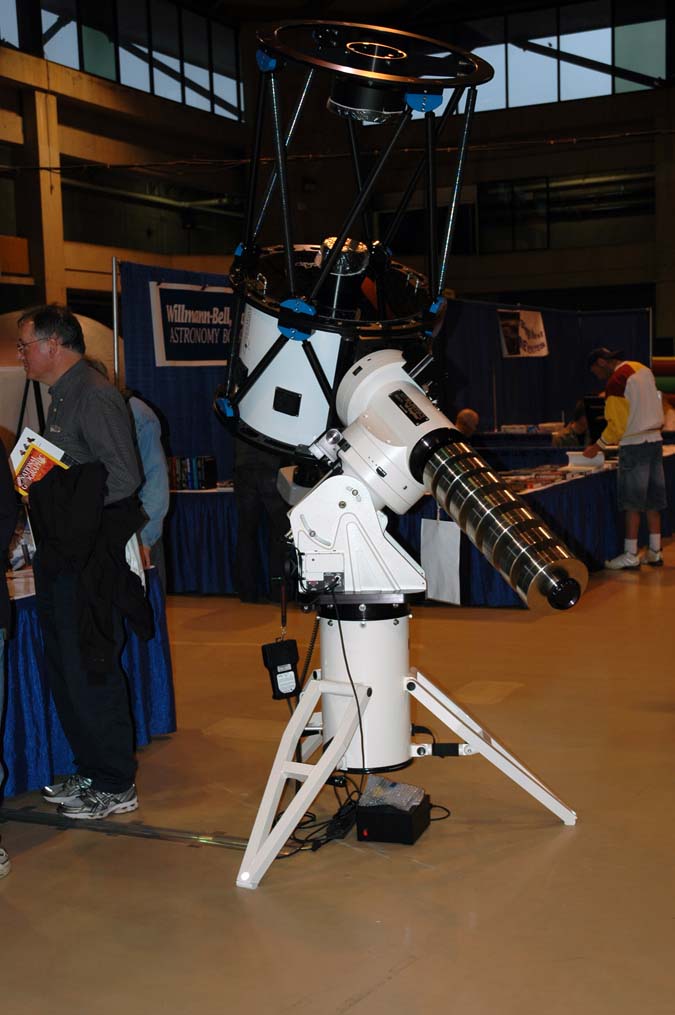
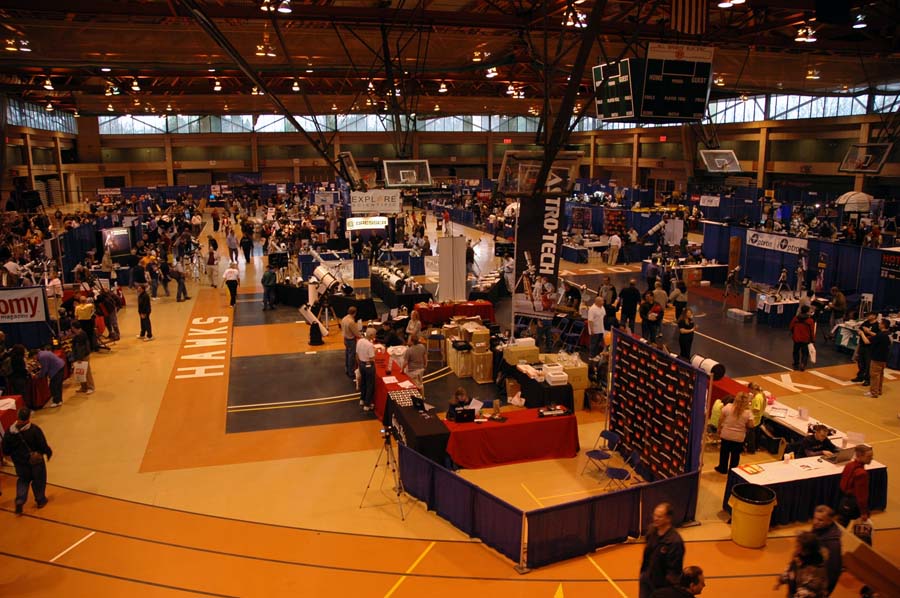
Now, back to the Midwest Astro-Imaging Conference (MWAIC). This was my first conference devoted to astro photography and I was very impressed. Al Degutis, Editor-in-Chief of AstroPhoto Insight Magazine, and a very dedicated group of volunteers did an outstanding job organizing this event. I never did hear an "official" count on the number of attendees but I would estimate that approximately 75 people were there. I thought the small size was good. I made a lot of friends and had some really interesting conversations with imagers from all over the U.S. The networking opportunities were one of my favorite things about this conference.


Adam Block from the Mount Lemmon SkyCenter conducted a Pre-Conference Workshop titled "Making Every Pixel Count" on Thursday, July 22, 2010. Unfortunately, I was unable to attend the Pre-Conference Workshop due to other commitments but I talked to several participants and they were all very enthusiastic about Adam's workshop. The next two days were filled with hour-long presentations by a wide-range of very knowledgeable presenters. Sessions included:


I know it sounds a little unbelievable, but every one of the sessions was well done. How often can you say that at a conference?


MWAIC 2010 also had a small but interesting group of vendors that included: Adobe Systems, ATIK USA, Canon USA, DC-3 Dreams, Fishcamp Engineering, ImagesPlus, Mt Lemmon SkyCenter, Optec Inc., Quantum Scientific Imaging (QSI), Starlight Xpress and Telescope Support Systems.


If you're interested in astro-imaging and you'd like to attend a conference where you can learn a lot and make many new friends you should definitely consider MWAIC in 2011.


By Ken Hudson, Friday July 02, 2010 at 05:15 PM | 0 Comments


Last week I published an interview with Sarah Maddison of Swinburne Astronomy Online (SAO). This week I am happy to publish interviews with four alumni of SAO. If you have ever thought about getting a postgraduate degree in astronomy I am sure you will find these interviews fascinating and inspirational. Each of the people interviewed has a unique and interesting story. The interviews are listed below in alphabetical order by last name.


Emil Lenc is a former engineer who is now a postdoctoral fellow at CSIRO (Commonwealth Scientific and Industrial Research Organization) Astronomy and Space Science. (CSIRO is Australia's national science agency.)


What was your educational and professional background prior to attending Swinburne Astronomy Online (SAO)?

I had a Bachelor degree in Electrical and Electronic Engineering and a Master degree in Engineering (by research).


What was your astronomy background prior to attending SAO?

I'd have to admit to being a bit of a closet astronomer at the time. I was quite interested in all things related to astronomy and space science (rockets, probes, etc.) and was immediately drawn to these topics in newspapers and magazines but did not have a great deal of practical experience with a telescope. I did have a small telescope that my father and brothers helped me put together when I was a child (in preparation for Comet Halley) but never really had an opportunity to use it much as I went through university and eventually a full-time working career.


What were your goals when you decided to apply to SAO?

My main goals were to keep my mind active to have fun ... and perhaps even find out a bit more about astronomy and what astronomers do.


Continue Reading...


By Ken Hudson, Thursday June 24, 2010 at 06:02 PM | 0 Comments


Have you ever wished that you could get a degree in astronomy? I'm sure that many of you are responding with a resounding "yes!". Guess what? You probably can get a degree in astronomy. Depending on where you live and your educational background, you may actually have many choices. One potential option available to people worldwide (assuming they meet the entry requirements, etc.) is Swinburne Astronomy Online (SAO). Swinburne Astronomy Online offers postgraduate degrees in astronomy via a fully online program.


The SAO web site is excellent and it does a first class job of answering many of the questions a prospective student would have about admission requirements, costs, course (or unit) details, etc. However, I was very curious about the program and I wanted to know more. I thought the readers of Share Astronomy would want to know more, too. So, I requested the opportunity to interview a member of the SAO faculty. I'm happy to say that I was lucky enough to get to interview Dr. Sarah Maddison who is an Associate Professor of Astrophysics and the SAO Coordinator at the Centre for Astrophysics and Supercomputing at Swinburne University of Technology. The interview is included below.


Next week I will have a follow-up interview with four graduates of Swinburne Astronomy Online.


What kind of student would be the ideal candidate for Swinburne Astronomy Online?

The program was initially designed for science educators and communicators, people working in astronomy related fields, amateur astronomers, and basically anyone with a love of astronomy! As time has gone by, students have joined SAO with a very wide range of backgrounds, so it really seems that there is no such thing as a "typical" SAO student. The entry requirements are an undergraduate degree, but it doesn't need to be in science. Prospective students just (need) to demonstrate that they can cope with formal studies.


What do your alumni do with their degrees? More education? Research? Teaching?

Again it varies. Some of our US alumni do change careers and use their Masters to start teaching astronomy in Community Colleges. Others use their degree to help them get a promotion in whatever their current employment is. Some have used their degree to help them move into astronomy-related fields, like public outreach and also telescope operator. Others just like to hang the degree on their walls and continue using their backyard observatories for their own pleasure.


Continue Reading...


By Ken Hudson, Monday June 21, 2010 at 05:59 PM | 2 Comments


I spent last week in New Mexico on vacation - what a fascinating state. For example, did you know that per capita New Mexico has more PhD's than any other U.S. state? I guess this shouldn't be surprising given the fact that Sandia and Los Alamos national laboratories are both located in New Mexico. In addition, New Mexico is home to many astronomical observatories and that probably bumps up the PhD count a notch or two. The Very Large Array, Apache Point Observatory and the National Solar Observatory / Sacramento Peak (Sunspot) are all located in New Mexico.


I visited both the National Solar Observatory / Sacramento Peak (Sunspot) and Apache Point last week and if you are ever in Southern New Mexico I would highly recommend visiting both observatories. They are next door to each other so a visit to both of them is easy. The nearest town is the village of Cloudcroft which is a very attractive and interesting mountain town. The drive to Sunspot is beautiful.


The National Solar Observatory (NSO) has three "Flagship Facilities", one of which is the Dunn Solar Telescope located on Sacramento Peak in Sunspot, New Mexico. There are actually several telescopes at Sunspot but the primary telescope is the Richard B. Dunn Solar Telescope (originally named the Vacuum Tower Telescope) which is shown on the left (you can click on this picture - or any of the others - to see a larger image.). This telescope is really quite unique. As you can see, the observatory - and the telescope - are tall (the building itself rises 136 feet (41.5 m) above ground and descends 228 feet (69.5 m) below ground). Light enters the telescope through a window at the top where it reflects off two 44" mirrors and then travels down a vacuum tube all the way to the bottom where it is reflected off of a 64 inch (163 cm) mirror and returned up the vacuum tube to ground level where it can be directed to various instruments. As I mentioned, the telescope is evacuated (i.e., it is a vacuum). If there was air in the tube it would be heated by the sun and cause distortion of the sun's image. Visitors are allowed into this building. You can see the ground floor laboratory but, as far as I know, visitors are not usually allowed upstairs or downstairs.


Continue Reading...


By Ken Hudson, Thursday June 03, 2010 at 04:18 PM | 0 Comments


In the fall of 2011, NASA is scheduled to launch the Mars Science Laboratory. If everything goes well the rover (pictured on the left in an image from NASA/JPL-Caltech) should land on Mars in August 2012. The principal goal of this mission is to determine if Mars ever had - or still does have - an environment capable of sustaining microbial life.


One interesting - and fun - aspect of this mission is that you can send your name along with the spacecraft to Mars. There will be a microchip on board the rover with the name of anyone who wants to participate. If you're interested just go to the Send Your Name to Mars page on the Mars Science Laboratory web site.


New, Noteworthy and Just Plain Fun


Search Blog Posts | List All Blog Posts